Tesla Roadster details emerge: Four versions, nitrogen tanks and a 2028 target
Following its flashy launch, Tesla has shared more details on the new Roadster's versions and technical targets. But the refill time of its thruster system and its performance claims are raising fresh questions.
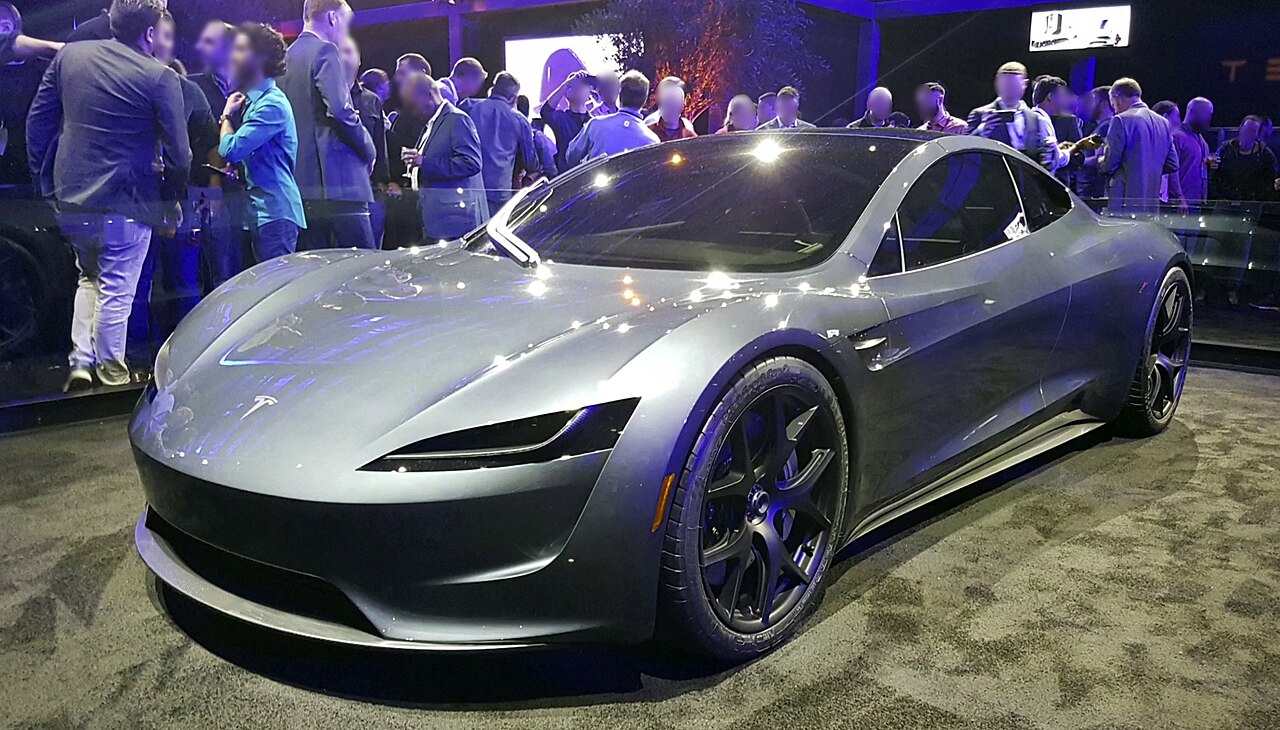
The new Tesla Roadster, unveiled with stunts including reverse driving, a ramp jump and a midair flip, has come into sharper focus through interviews given after the launch. The information shared shows that most of the eye-popping figures that stuck in people's minds belong to the most extreme versions.
Four versions, all rear-wheel drive
The Roadster will be offered in four versions: Roadster, Performance, Thrust and Rocket. All versions will use rear-wheel drive only. Tesla says some versions will exceed 1,341 horsepower (1,000 kW) and 1,400 Nm of torque but has not said which ones. According to Top Gear, the entry-level version will produce 1,073 horsepower (800 kW).
The company's stated 0-60 mph times are under 1.6 seconds for the Performance, under 0.9 seconds for the Thrust and under 0.59 seconds for the Rocket. Tesla says the Rocket could drop to 0.55 seconds when a one-foot rollout is excluded. The targeted range is 300 miles (483 km), while Top Gear cites 310-320 miles (499-515 km) depending on the version. The production weight target for the entry-level version is under 1,700 kg.
Thrusters and the refill problem
The cold-gas thrusters behind the acrobatics in the demonstration are fitted only to the Thrust and Rocket. In the Thrust, four rear thrusters are fed by a 200-liter nitrogen tank. The Rocket adds a 400-liter tank in place of the passenger seat, for a total of 600 liters, along with six additional thrusters.
According to Top Gear, the Thrust's tank empties in about six seconds and requires a station to refill. When the tank is empty, the electric motors keep working, but the extra thrust behind the most ambitious acceleration figure disappears. Hagerty reports that filling the Rocket's 600-liter system takes six to seven hours; Tesla aims to cut that to 30 minutes.
Differing figures are also circulating for top speed. At the official launch, more than 230 mph (370 km/h) was announced, while Elon Musk said he wants to see half the speed of sound, or 384 mph (617 km/h). Tesla, meanwhile, told Top Gear it is targeting 330 mph. None of these figures has yet been verified by independent testing. It is also unclear whether the cars used in the demonstration share the same battery, tank, suspension and control systems as the production model.
Engineering in the shadow of the show
Beyond the thrusters, the Roadster features notable technical solutions. These include special aluminum-cased 4680 cells cooled from both sides, steer-by-wire and brake-by-wire systems, active aerodynamic surfaces including a rear wing with different operating modes, and a fan-assisted downforce system familiar from the racing world. Tesla plans to deliver the car to customers in 2028.
Photos 3
Photos from Wikimedia Commons, used under their free licences.
This article was compiled with the help of AI from information published by Carscoops.