Porsche Mission S swaps digital display for a tachometer with a physical needle
Porsche's mid-engined supercar concept, the Mission S, does away with a central infotainment screen and uses a real needle sweeping over a circular display for its tachometer.
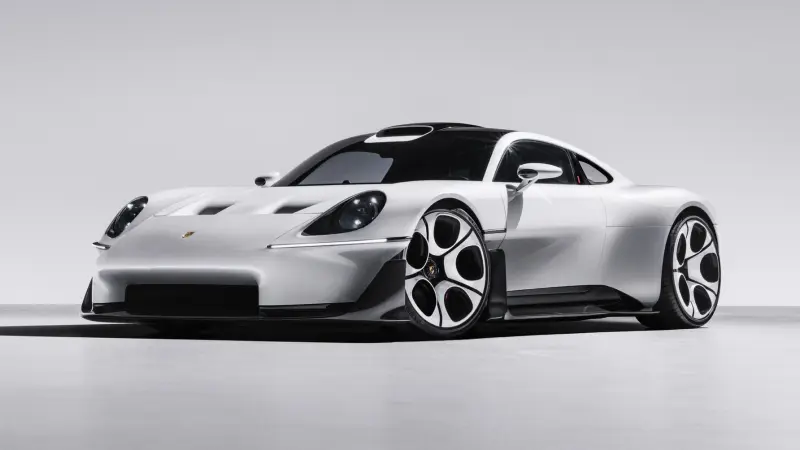
The Mission S concept, which previews Porsche's future mid-engined flagship supercar, stands out for an eye-catching choice in its cabin. The car has no built-in infotainment screen. Its tachometer isn't fully digital either: it consists of a physical needle rotating over a circular display.
Every model in the brand's current lineup uses a fully digital instrument cluster. That makes the Mission S solution a new approach with no counterpart in Porsche's existing range.
Five separate circular gauges
In describing the Mission S cabin, Porsche emphasizes analog and digital controls working side by side. The clearest example of that philosophy is the set of five independent circular gauges in front of the driver. The tachometer in the middle, with its physical needle, forms the centerpiece of the cluster. A small section of the gauge glass acts as a magnifying lens to make the gear indicator easier to read, a nostalgic touch familiar from classic watches. Depending on the selected drive mode, the tachometer moves forward toward the driver, setting itself apart from the gauges beside it.
Designing hybrid gauges like these is not as easy as it looks. The quality of the screen beneath the needle plays a decisive role; panel choice is critical to achieving deep blacks without light bleed. Porsche has not disclosed which display technology it uses in the Mission S.
An analog comeback in supercars
The Mission S is not alone in this trend. The Bugatti Tourbillon, with gauges inspired by watch movements, was one of its pioneers. The Ferrari Luce follows a similar path with an interior that blends technology and traditional elements. Rimac founder Mate Rimac says the supercar market has entered a "Swiss watch era," in which analog craftsmanship now takes precedence over the latest software.
Alfa Romeo's recently unveiled Cuorerosso concept interprets the same idea in a different way. It does have a screen in the center console, but the display disappears behind a mirrored, patterned surface when not in use. The Mission S doesn't go even that far.
The main reason instrument panels went first partly and then fully digital was that screens became cheaper than physical hardware. Whether analog elements will eventually trickle down to more affordable models remains unclear. Having to place their phones in the dashboard every time they get in could spark debate among drivers; even so, with this design Porsche is sending a clear message to car enthusiasts.
This article was compiled with the help of AI from information published by The Drive.