Germany and France agree on 'Made in Europe' rule, leaving Türkiye out
Germany and France have agreed a common position on a rule giving European-made cars priority in public support schemes. The UK could qualify under certain conditions, but no similar exemption is planned for Türkiye.
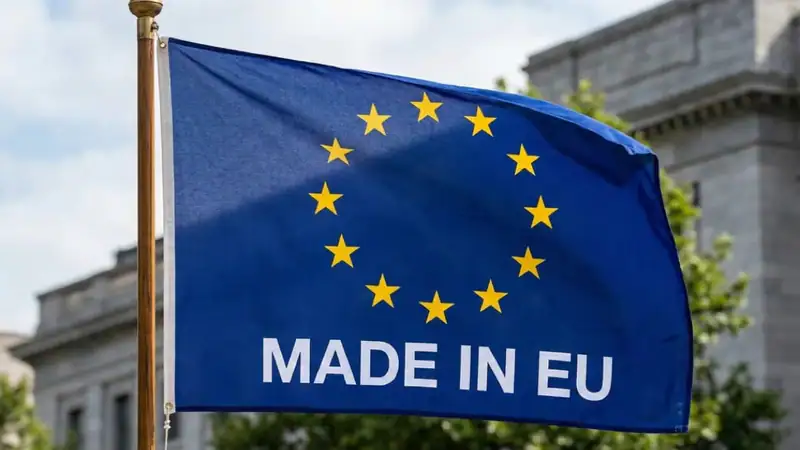
Germany and France have agreed on a 'Made in Europe' approach aimed at protecting the European car industry. France wanted European production protected for cars supported with public funds. Germany argued that global production networks should continue and that manufacturers should be given more flexibility. The two countries have combined European production priority and flexibility on 2035 emissions targets into one package.
Türkiye left out of scope
Under the agreed framework, some European countries that meet certain conditions could be included alongside EU members. This would allow the UK, Norway, Iceland and Switzerland to count as European production. Türkiye, which has a Customs Union agreement with the EU, falls outside the broader definition.
The European Commission's Industrial Accelerator Act proposal aims to give priority to vehicles made in Europe in certain public procurement and support schemes. One of the main criteria in the proposal is that at least 70% of the value of components, excluding the battery, must be of European origin. Final assembly of vehicles in Europe is also a condition. These requirements do not amount to a general import ban on all cars sold in Europe.
Exports and industry reaction
Manufacturers including Ford Otosan, Oyak Renault, Toyota and Hyundai produce cars and light commercial vehicles in Türkiye for the European market. The Turkish automotive industry exported about $41.5 billion in 2025. Of this, $30.1 billion went to EU countries, giving the EU a 72.5% share. Industry observers say that if production in Türkiye is not considered European origin, Turkish plants could face a competitive disadvantage in public-funded purchases and new model investments. The regulation does not end the existing Customs Union relationship.
Toyota has asked that countries playing a role in its supply chain, including the UK, Türkiye and Japan, be considered under the new system. Xavier Martinet, president of Hyundai Motor Europe, said at the series production ceremony for the Ioniq 3 in İzmit that excluding Türkiye could raise production costs and, in turn, prices. Florian Huettl, CEO of Opel, said at the Paris Motor Show that the partnership with Tofaş is a long-term one. He said the priority is to put the current light commercial vehicle project into production and that it is too early to talk about new projects.
2035 target
Under the agreement, manufacturers would be required to cut CO₂ emissions from new cars by 90% by 2035 compared with 2021 levels. The requirement to offset the remaining 10% using low-carbon steel or alternative fuels is expected to be dropped. This could allow certain combustion engine and hybrid models to remain on sale after 2035. The EU legislative process must be completed before the regulation can take effect.
This article was compiled with the help of AI from information published by Habertürk.