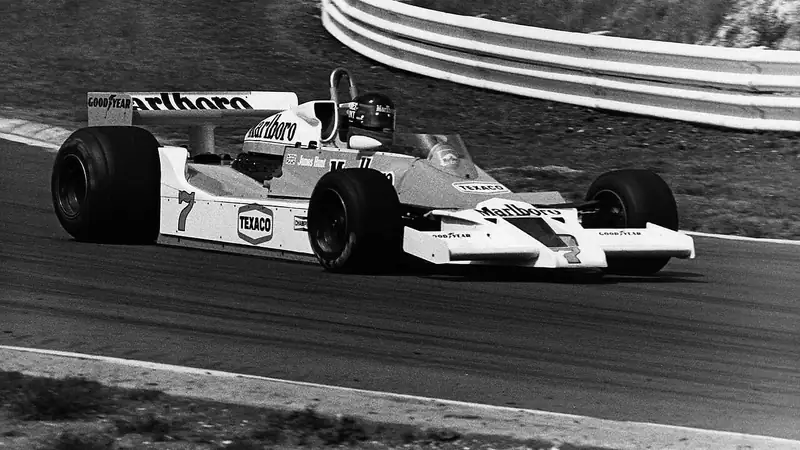
Fifty years ago today, Hunt won the world title by one point at Fuji
On 24 October 1976, James Hunt finished third at the Japanese Grand Prix at Fuji Speedway, edging Niki Lauda by one point to take the world championship.
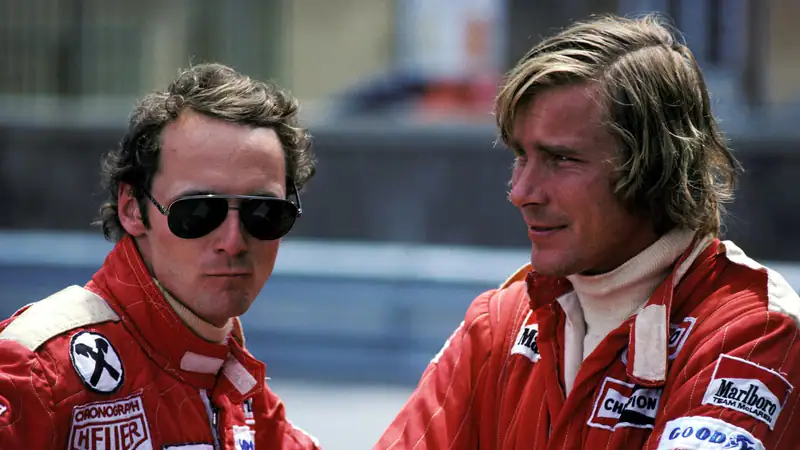
Fifty years ago today, on 24 October 1976, the 16th and final race of the Formula 1 season was run at Fuji Speedway. Niki Lauda arrived in Japan three points ahead of James Hunt, so the title was still open going into the last race. Hunt finished third, and the championship went to Lauda by a single point.
The season leads to Fuji
The season had been overshadowed by Lauda's potentially fatal crash at the Nürburgring and the races he missed afterwards. In the constructors' standings, Ferrari led McLaren by 11 points and had already secured the title at the previous race. The winner of the Japanese race would receive 9 points, so the drivers' championship would be decided at Fuji.
Mario Andretti took pole position in qualifying in his Lotus 77. Hunt started second on the front row and Lauda third. Behind them were John Watson, Jody Scheckter, Carlos Pace, Clay Regazzoni and Vittorio Brambilla. Ronnie Peterson and Masahiro Hasemi completed the top 10. Maki and Tony Trimmer failed to qualify.
There were Japanese drivers on the grid too. Kazuyoshi Hoshino raced an older Tyrrell run by Heros Racing, and the car used Bridgestone tyres. It was the first Formula 1 start for a Japanese manufacturer. Hasemi qualified a Kojima Engineering car, a domestically built chassis, on Dunlop tyres.
Rain, fog and Lauda's decision
On race day the track was very wet, fog hung over the circuit and water was flowing across parts of it. Whether to start the race was debated at length. The organisers decided to go ahead, and most of the drivers did not object. Lauda was among those who were unhappy with the decision.
Hunt took the lead at the start, with Watson and Andretti behind him. On the second lap Watson slid into the run-off area. The same lap, Lauda pitted and retired, having judged the conditions too dangerous. He later said, "My life is worth more than a title." Larry Perkins followed him into the pits one lap later, and Pace and Emerson Fittipaldi did the same later in the race.
Championship decided on the final laps
Hunt held the lead. On lap 22 Brambilla challenged him for it but went off the track, and he retired with an electrical failure 15 laps later. Jochen Mass, who had moved up to second, crashed just before Turn 7 on lap 36. Patrick Depailler took second and Andretti third.
As the track dried, Hunt began losing positions. With Lauda out, fourth place was enough for the title, but on lap 62 Depailler and Andretti passed him. Two laps later Depailler's left-rear tyre began to deflate and he pitted. Andretti moved into the lead, while Hunt also pitted with a similar tyre problem and dropped to fifth. Depailler then pursued Alan Jones and Regazzoni. He passed both on lap 70, and the following lap Hunt also passed both, which secured the championship. Hunt briefly appeared fifth in the unofficial first results, which caused some confusion, but after a short review his third place was confirmed.
Aftermath
Andretti won the race. It came five years, seven months and 18 days after his first win, at the 1971 South African Grand Prix. As of 2024, that remains the longest gap between a driver's first two Formula 1 wins on record. Hunt's one-point margin was the closest championship finish in eight years. Ferrari won the constructors' title despite Lauda's retirement.
The official name of the race in Japan was not the "Japanese Grand Prix" but the "Formula One World Championship in Japan", because a Japanese Formula 2000 race that year used that name. The fastest lap was initially credited to Hasemi. Days later the timing was corrected, and Jacques Laffite was confirmed as having set the fastest lap on lap 70 in 1:19.97. It was Ligier's first fastest lap. Hans Binder, Noritake Takahara, Masami Kuwashima, Hasemi and Hoshino, along with the Kojima team, made their Formula 1 debuts at this race.
This article was compiled with the help of AI from information published by Wikipedia.