Aston Martin's F1 puzzle: is the problem the chassis or the Honda engine?
An analysis by The Race's Mark Hughes, based on GPS data, suggests the AMR26 can be even faster than the pole-sitting car through the corners, but that its Honda power unit costs it significant time on the straights.
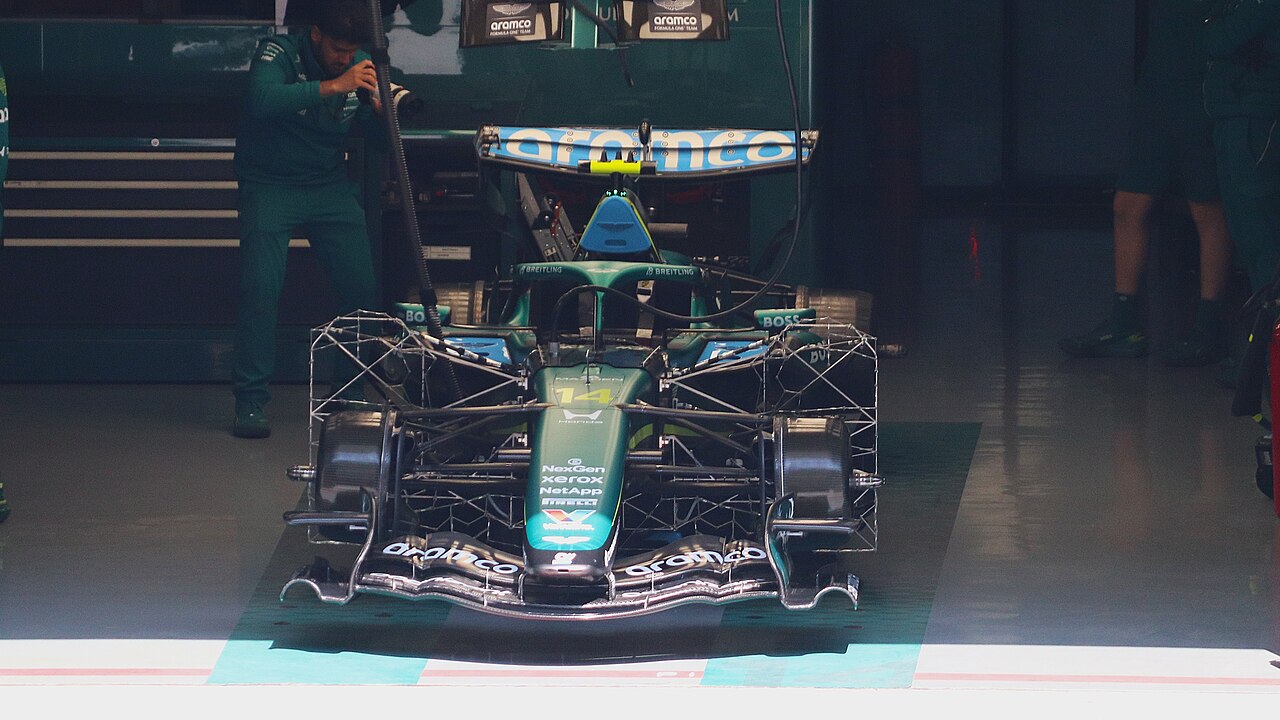
With tension persisting in the relationship between Aston Martin and power unit partner Honda, debate continues over the real source of the team's poor results this season. The Race writer Mark Hughes, in an analysis of GPS data, argues that the AMR26's chassis performance is far better than believed and that most of the deficit comes from the engine.
At each track, Hughes calculated how much time Aston Martin lost to the pole-position car in the full-throttle sections, mainly the straights. Subtracting that loss from the overall lap-time gap reveals the car's true performance in the corners.
A striking picture in Sepang and Singapore
The most notable example is Sepang. In a race where both Aston Martins reached Q2 for the first time, Fernando Alonso was 12th, 2.090 seconds behind Max Verstappen's pole time. But the Spaniard lost 2.238 seconds in the full-throttle sections alone. That means that with equal power, Alonso could have taken pole by around a tenth and a half.
A week later in Singapore, Alonso was knocked out in Q1 and was convinced his turbo was faulty; Honda, however, said it had found no fault. Even so, the car was more competitive through the corners than in Sepang: the overall gap was 2.85 seconds, while the loss in the full-throttle sections was 3.22 seconds.
According to the calculations, the engine's share of the deficit was 92.9% at Monza, 59.3% at Zandvoort, 49.6% at the Hungaroring and 47% in Baku. In Sepang and Singapore, the figure exceeds 100%.
The chassis improves while the engine appears to regress
The AMR26 stood still between Barcelona and Spa while rivals brought upgrade packages, receiving its only update in Hungary. After that package, Alonso repeatedly praised the car's balance. But the expected progress on the Honda side never came. After the ADUO 1 upgrade introduced at Zandvoort, both drivers reported a step backward in driveability. ADUO 2, which included a turbo change, was first used in Baku; the unit worked well in Sepang but caused serious inconsistencies in throttle response and energy deployment on Singapore's corner-after-corner layout.
Hughes also stresses that the data must be read carefully. Track evolution between sessions, chosen wing levels, and drag and downforce figures that teams do not disclose can all affect the results. In addition, Honda's architecture, with the MGU-K placed at the front at Newey's request, centralizes mass and may make the car's cornering performance look better than it actually is.
Still, the analysis indicates that, with equal power, the AMR26 would have been a car between the upper reaches of Q2 and the lower end of Q3 from the Hungary update through Sepang, and capable of fighting for pole from Sepang onward. A similar picture is expected to be at the center of future talks between the team and Honda.
This article was compiled with the help of AI from information published by The Race.